
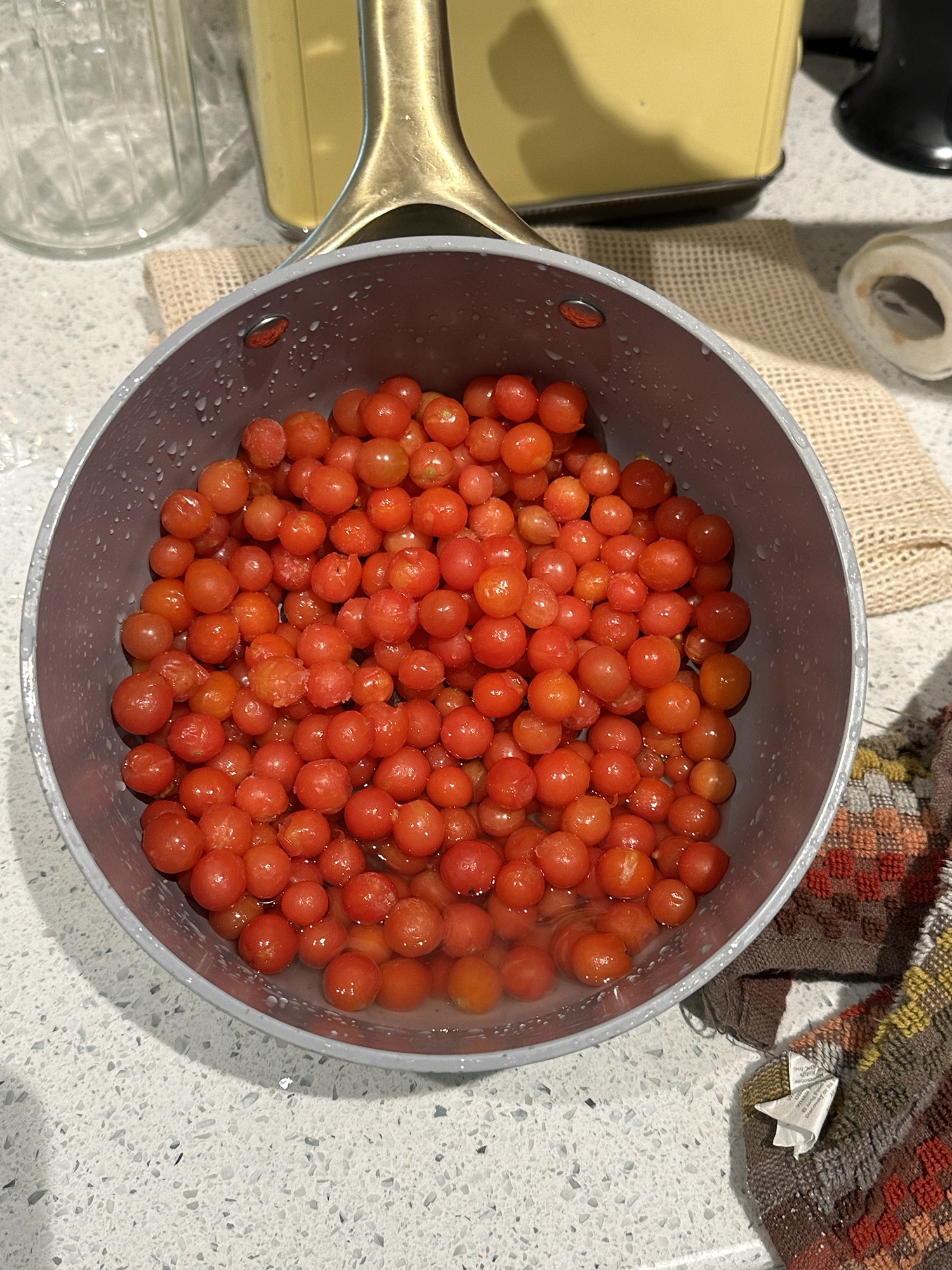
Everglades tomato, currant tomato, wild tomato, pimp
The Everglades tomato is an heirloom variety native to Ecuador and Peru. They are quite hardy and, unlike domesticated tomatoes, tolerant of the poor soil, brackish water and the tropical heat of Florida’s summers. This tomato is able to fruit all year long and is resistant to several common fungal diseases.

A friend gave me a plant last year and they have reseeded themselves in the garden and other random places in the yard. I have also found them growing along ditches in rural parts of Florida.
The tomato genome was first sequenced in 2012, and through this research it is now known that Solanum pimpinellifolium originated in the Andes around 80,000 years ago. It is hypothesized that seeds were carried by early Native Americans and migratory birds north to Central America and Mexico.
By the 16th century, Spanish colonizers wrote of seeing “large tomatoes, small tomatoes, leaf tomatoes, sweet tomatoes, large serpent tomatoes, nipple-shaped tomatoes” in the Aztec market at Tenochtitlán, now known as Mexico City.


In fact, the etymology of the English word “tomato” can be traced back to the Spanish word “tomate” which was derived from the Nahuatl word “tomatl” used by the Aztecs to describe the fruits.
Eventually this tiny tomato continued north to the Florida Keys and the Everglades where it became naturalized.
BOTANICAL DESCRIPTION
Everglades tomatoes are short, bushy plants with long, spreading stems. The odd-pinnate leaves have five to nine leaflets with serrated margins. Both the stem and leaves are densely glandular-hairy. Small yellow flowers produce small red fruits the size of a blueberry.

PHYTOCHEMICALS
The fruits have higher amounts of lycopene, vitamin C, phenolic acids, as well as a higher antioxidant activity than domesticated tomatoes, Solanum lycopersicum.
RECIPE
The Everglades Tomato is packed with old fashioned tomato flavor. However, I find them too seedy for salads and the like. I prefer to make sauces such as marinara or ketchup with them. Because they are so small, you need quite a few for any recipe. What works best for me is to harvest what’s ripe from the garden every day or two, and pop them in a bag in the freezer until I have enough.

Everglades Smoked Paprika Steak Sauce
- 2 cups tomatoes
- 1/2 cup water
- 2 Tbsp white or apple cider vinegar
- 1 Tbsp honey
- 1 Tbsp garlic powder
- 1 Tbsp onion powder
- 1 Tbsp smoked paprika
- 1/2 tsp salt
- 1/2 tsp pepper
Place tomatoes in a saucepan with water and simmer until the fruits soften and burst.
Turn off heat and mash the tomatoes with a potato masher. Then strain with a large steel wire mesh strainer using a wooden spoon to press the soft pulp through into a bowl. Discard the seeds and skins that remain in the strainer.
Return the tomato purée to the saucepan and add the rest of the ingredients. Simmer until sauce is thickened.

This sauce balances the tangy sweetness of the tomatoes with the smokiness of the paprika and was perfect on last night’s hanger steak.
References
Gladding, C. (2020, March 27). Everglades tomato: A great variety for Florida. University of Florida. https://blogs.ifas.ufl.edu/clayco/2020/03/27/everglades-tomato/
Solanum pimpinellifolium. (2024, March 24). InWikipedia. https://en.wikipedia.org/wiki/Solanum_pimpinellifolium
Tomato. (2024, May 19). In Wikipedia. https://en.wikipedia.org/wiki/Tomato#Cultivation
Top, O., Bar, C., Őkmen, B., Őzer, D.Y., Rusçuklu, D., Tamer, N., Frary, A. & Doğanlar, S. (2014). Exploration of three Solanum species for improvement of antioxidant traits in tomato. Horticulture Science, 49(8),1003–1009.
University of Illinois Urbana-Champaign. (2020, July 25). The history of tomatoes: How a tropical became a global crop. https://extension.illinois.edu/blogs/garden-scoop/2020-07-25-history-tomatoes-how-tropical-became-global-crop
Subscribe and get wild foods . . .
Straight to your inbox!
Disclaimer: Information contained on this website should not be considered as a recommendation or an endorsement. This information is intended for educational purposes only, and is strictly and categorically intended as a reference to be used in conjunction with plant experts in your area. Roaming Roots accepts no liability for the use or misuse of information contained in this website. Consumption of plants and fungi is at the reader’s own risk and discretion.


Leave a Reply