

BEE BALM, WILD OREGANO, OSWEGO TEA, HORSEMINT, OREGANO DE LA SIERRA, BASIL BEE BALM, BASIL BERGAMOT, WHITE BERGAMOT
June 19, 2022
Our next stop was my favorite city, New Orleans. When I walk the streets of the French Quarter, my eyes are dazzled by the mixture of Spanish and French architecture, my ears are enchanted by the sound of jazz and blues drifting through the air, and my other senses tingle with the magic of voodoo and hoodoo. Joe and I did the typical tourist activities – shopping on Magazine Street, driving around the Garden District, bar-hopping on Bourbon Street, and wandering through the artist stalls and fortune tellers at Jackson Square.


However, this time we also went to the Audubon Aquarium of the Americas which has exceptional exhibits of the Caribbean, Amazon, Mississippi River and Gulf of Mexico.


FORAGING CHALLENGES
Foraging in the city was challenging, so I enlisted the help of the Fallen Fruit app, an international collaborative map for urban foragers. The app allows you to input an address, then foraging locations are pinned with orange dots. Click on a dot, and information about whatever edible plant is located there pops up. The level of detail in the description varies on the amount of data the user who logged the info shared but, it can include information on the best season to harvest, the quality and yield of the plant, a link to the species profile on the U.S. Department of Agriculture’s website, and any additional advice on accessing the spot (such as “ask Frank in the store if you can have some”).
Fallen Fruit was a huge help in locating potential foraging sites and I will definitely be using the app again in the future. However, the fig, plum, pear and hackberry trees were all out of season. But mulberries were not! So Joe and I were off on a mission exploring city parks for mulberries. Sadly, I only found two pink unripe berries on one bush. Either the wildlife or the residents of a nearby homeless encampment beat me to them.
AN UNEXPECTED JACKPOT
Our RV park was located outside the city and one day we visited a small nearby park in Kenner, Louisiana with a bronze sculpture that claims to commemorate the first world heavyweight boxing championship fight in 1870 (bare knuckle prizefighting was illegal in the city of New Orleans at the time). In the flower beds tucked around the park I found a plethora of edible herbs and medicinal plants:
- Clary Sage (Salvia sclarea)
- Swamp Verbena (Verbena hastata)
- Senna (Cassia angustifolia)
- Hoary Mountain-Mint (Pycnanthemum incanum).
- While I did collect a small amount of the above for use later, since we were not constipated, anxious or congested, it was the White Bee Balm (Monarda clinopodia) that made it into supper!
BOTANICAL DESCRIPTION
Monarda species are native to North America and have erect, square stems with oppositional, coarse, hairy leaves. Their tubular flowers are arranged like bursting fireworks and come in a variety of colors including white, red, violet, and deep purple. Bee balm has a minty flavor similar to oregano and the leaves have a citrusy aroma when crushed.


RECIPE
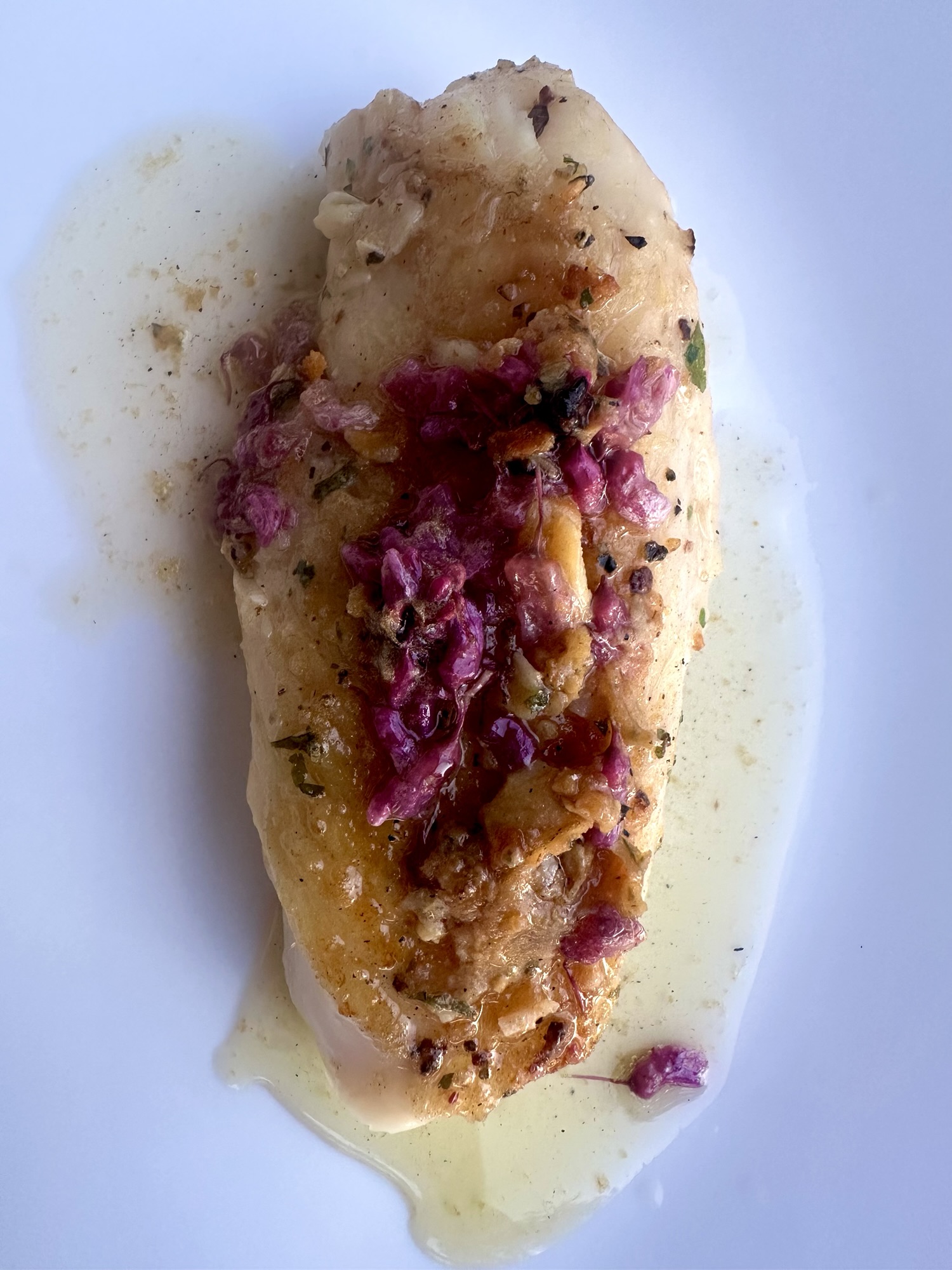
Pan Seared Chicken with Forager’s Grenobloise Sauce
- 3 chicken cutlets
- 1 tsp chopped bee balm (can substitute oregano but be aware that bee balm flavor is usually stronger than regular oregano)
- 3 cloves of minced garlic
- 2 Tbsp olive oil
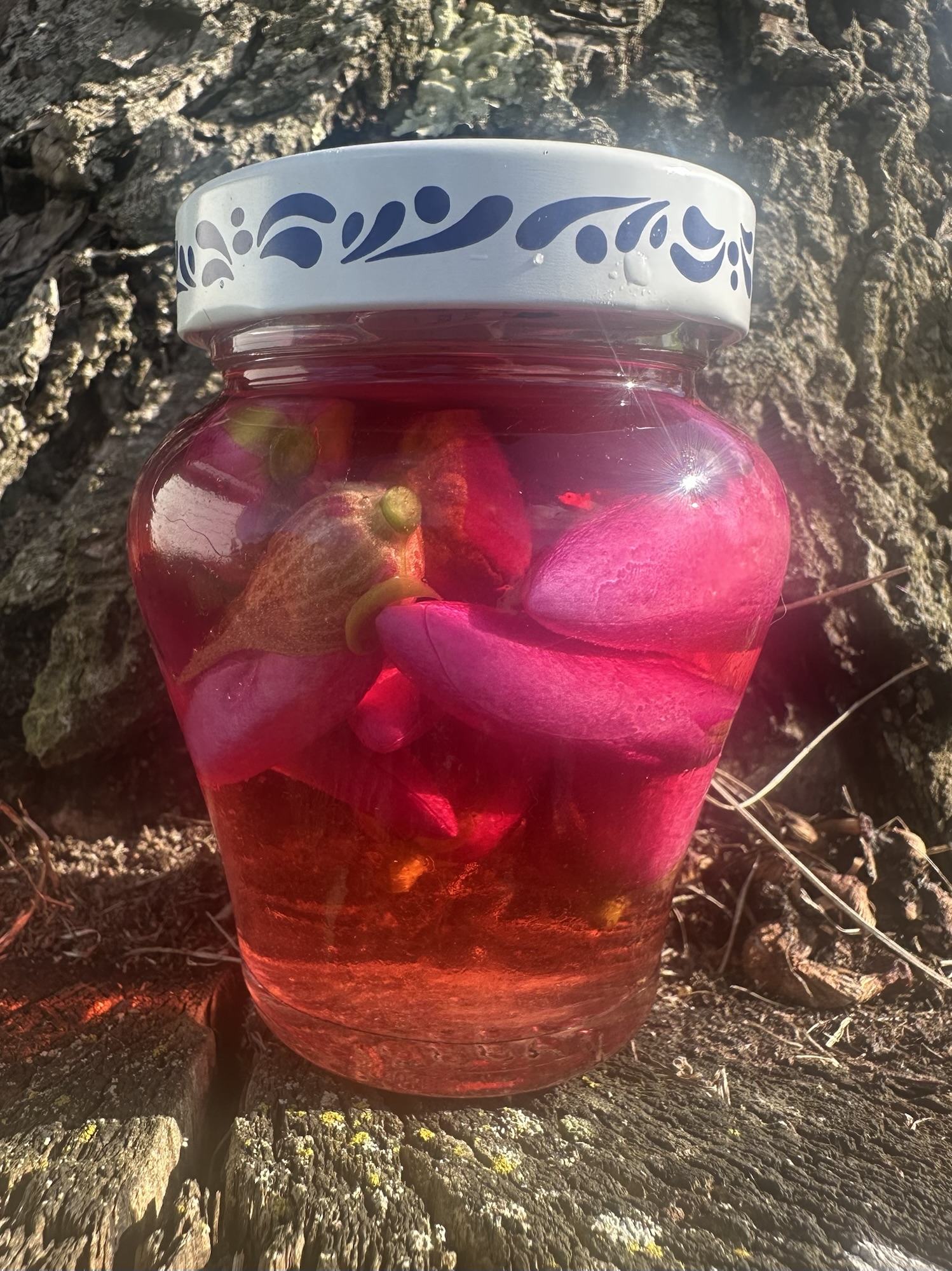
- 3 Tbsp pickled silverhead (can substitute capers)
- 4 Tbsp butter
- Lemon juice (from 1/4 lemon)
- Salt & pepper
Marinate chicken at least 30 minutes in garlic, bee balm, olive oil, salt & pepper. Pan sear the chicken and set aside.
In the pan, place cold butter and swirl over medium-heat until it just begins to brown, add the leftover marinade and stir 1-2 minutes. You will smell the milk solids start to turn and then, all of a sudden, they will shift from light to dark. Immediately turn the heat off and stir in the lemon juice and the pickled silverhead. Season with salt and pepper. Spoon over chicken and serve.

This is a bit of a non-traditional recipe, meaning I made it up, but the bee balm and garlic was a fantastic flavor combination. My only criticism was that the pickled silverhead lost some of its crunch and was more mild than traditional capers.
TRADITIONAL USES & HERBAL BENEFITS
All varieties of bee balm have been, and continue to be, used by various Native American tribes, including the Blackfoot, Ojibwa, Winnebago, Hopi and Cherokee. Contemporary research has also identified numerous bioactive phytochemicals to support its use. Listed below are some of the traditional medicinal applications of this herb.
• Respiratory health
• Antibacterial
• Antiseptic
• Antiviral
• Antifungal
• Antioxidant
• Antiallergenic
• Anti-inflammatory
• Decongestant
• Expectorant
• Carminative
• Emmenagogue
• Styptic
Safety Issues/Contraindications:
- Pregnancy (due to the stimulation of uterine secretions)
- DO NOT MIX WITH VALERIAN – this has been known to cause vomiting
References
Martin, E. (2022). Rebecca’s Herbal Apothecary & Supply. Monarda. https://www.rebeccasherbs.com/pages/herb-article-br-monarda
Shanaida, M., Hudz, N., Jasicka-Misiak, I. & Wieczorek, P. (2021, April 29). Polyphenols and pharmacological screening of a Monarda fistulosa L. dry extract based on a hydrodistilled residue by-product. Frontiers in Pharmacology, (12). https://www.frontiersin.org/articles/10.3389/fphar.2021.563436/full
Subscribe and get wild foods . . .
Straight to your inbox!
Disclaimer: Information contained on this website should not be considered as a recommendation or an endorsement. This information is intended for educational purposes only, and is strictly and categorically intended as a reference to be used in conjunction with plant experts in your area. Roaming Roots accepts no liability for the use or misuse of information contained in this website. Consumption of plants and fungi is at the reader’s own risk and discretion.


Leave a Reply